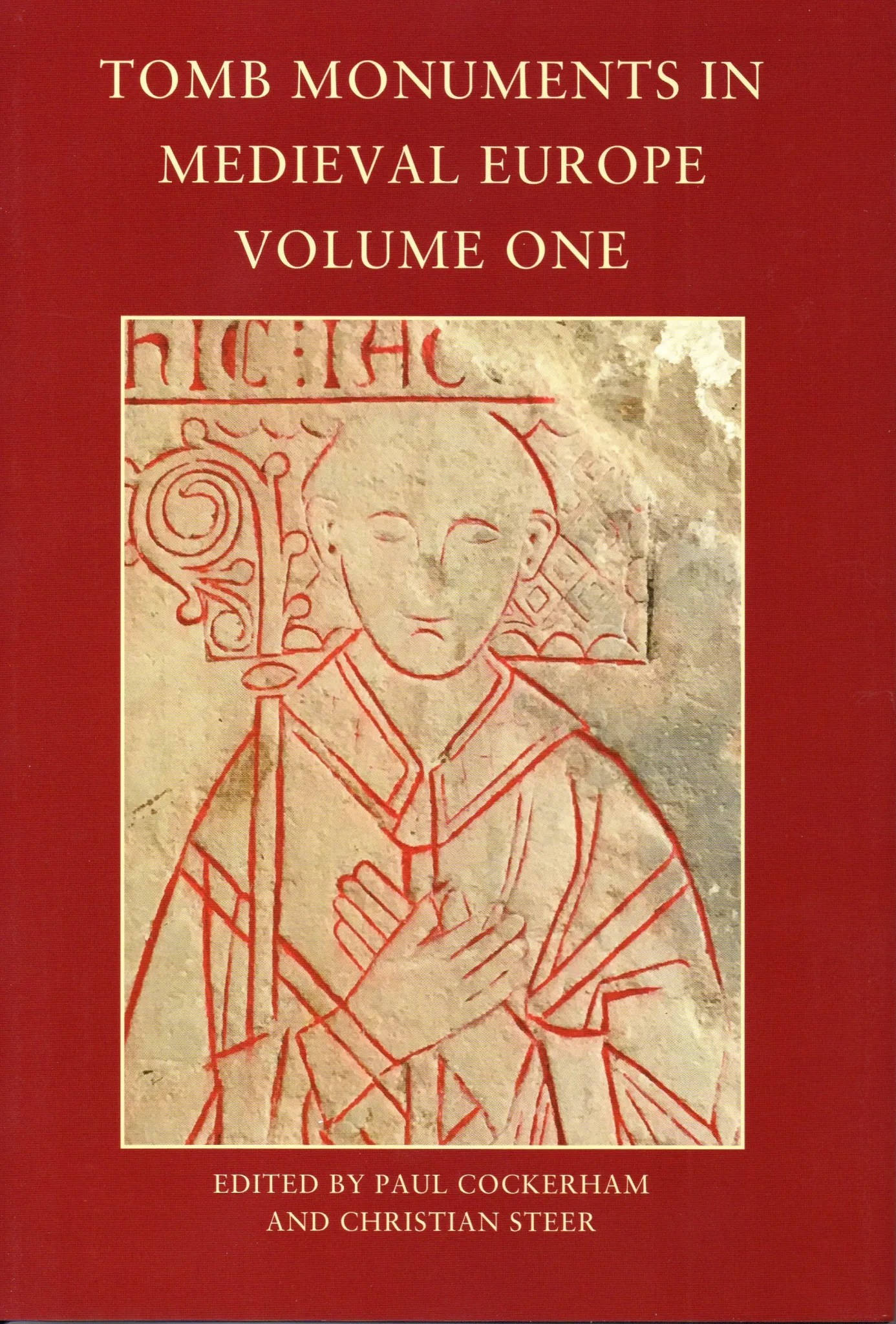
This, the first of three volumes, brings together twenty-one authors who each consider different aspects of tomb monuments across Europe during the Middle Ages. They adopt contrasting approaches and use varying methodologies in their focus on individual case-studies and their context as regional investigations, at both local and national levels, and by considering the importance of patronage and influence.
The contributors consider developments such as these in Cyprus, England, France, the Holy Roman Empire, Iberia, the Italian States, Jerusalem and Norway, from early mosaics and runic-inscribed stones to the elaborate demonstration of the Italian gothic in Naples.
The first volumes is both a scholarly resource and a visual feast, laying the foundations for two further volumes that will delve deeper into regional variations and the changing manifestations of tomb monuments in the late medieval period.
Table of Contents
- Paul Cockerham, Introduction: Tomb Monuments in Medieval Europe
- Johan Bollaert, The Materiality of Roman and Runic Alphabet Tombs in Medieval Norway
- Iris Crouwers, From Europe to the Fjords: The Development of Sepulchral Monuments in West-Norwegian Churchyards (c.1030–1350)
- Øystein Ekroll, Northern Ladies: The Incised Slabs of Aristocratic Ladies in Medieval Norway
- Savvas Mavromatidis, Unveiling the Maternal: An Incised Slab of a Pregnant Woman in Late Medieval Cyprus
- Estelle Ingrand-Varenne and Maria Aimé Villano, The Words of the Last Hour: Tombs and Epitaphs for Women in the Kingdoms of Jerusalem and Cyprus
- Vincent Debiais, Verse and Prose, Formulary and Creation: The ‘Unexpected’ in Funerary Inscriptions on Medieval Slabs in France (1150–1350)
- Xavier Barral i Altet, The 11th-Century Rise in Monumental Funerary Sculpture and the Beginnings of the Romanesque gisant in Europe
- Vinni Lucherini, The Angevin Royal Tombs in Naples and their Kinship Discourses (1323–43)
- Karen Blough, The Abbatial Effigies from Quedlinburg: Conceptualisation, Significance and Function
- Robert Marcoux, The Beaumont Tombs and the Political Context of Thirteenth-Century Maine
- Philip Muijtjens, Visibility and Exclusivity: The Tombs of Blanche (d.1243) and Jean of France (d.1248) in the Cistercian Abbey of Royaumont
- Rocío Sánchez Ameijeiras, The Dormant Kings: Aethtics, Politics and the Royal Tombs at Santiago de Compostela (1211–1374)
- Luca Salvatelli and Gianpaolo Serone, Monumental Tombs and Sepulchral Memories in the Dominican, Franciscan and Augustinian Convents of Viterbo of the Thirteenth Century: A General Catalogue
- Federica Cosenza and Lorenzo Curatella, The Pantheon in the Middle Ages: The Tomb Slabs of Santa Maria ad Martyres in Rome (c.1250–c.1500)
- Christene d’Anca, The Brabantian Influence on Westminster Abbey: Henri III of Brabant’s Tomb, an Inspiration for Henry III and Edward I of England
- Sarah S. Celentano, Selective Kinship at the Priory of Saint-Louis de Poissy: The Sculpted Family of Louis IX and the Heart Tomb of Philip IV
- Stefania Botticchio Giorgi, Strategies of Visualisation: The Development of Microarchitecture on Canopie d Effigies of the Iberian Peninsula, c.1290–1493
- Edward Impey, The Canopied Funerary Monument in England, 1290–1600
Discover more from Medieval Art Research
Subscribe to get the latest posts sent to your email.

