Find out more about this new book on the publisher’s website.
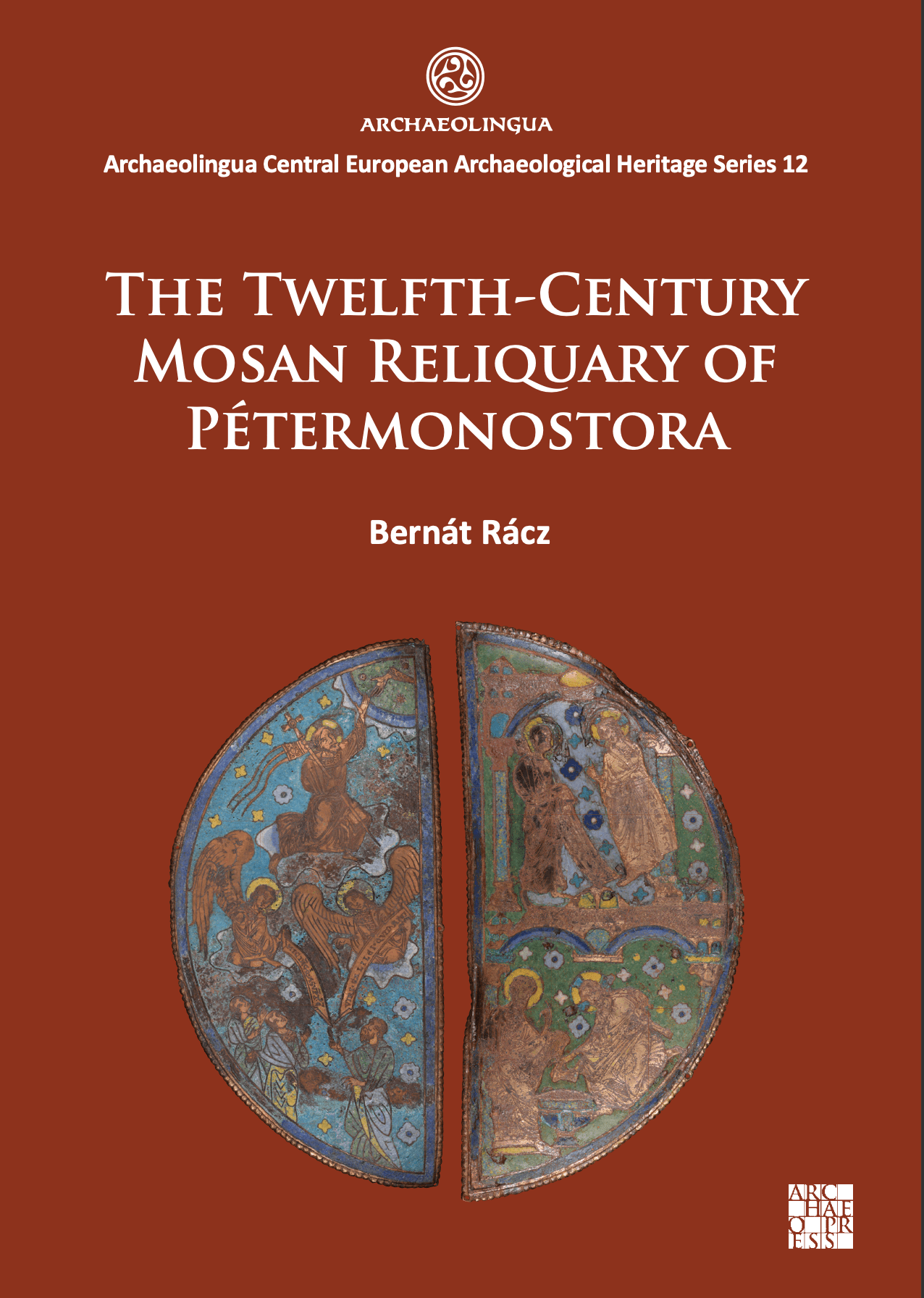
In 2013, during the excavation of the archaeological site of Pétermonostora (Hungary), two exceptionally large enamel plaques were discovered. The reliquary they belonged to was made by a Mosan artist, possibly in the Meuse Valley, a major intellectual and artistic centre of the period. The artwork’s remains constitute one of the greatest discoveries in medieval Hungarian archaeology. Even though the site was completely destroyed by the Mongols in 1241, its remains, and especially artefacts like the reliquary, create a unique image of a large, thriving settlement, home to a Latin Christian masterpiece. Given the destruction of sources and artworks in the region, Pétermonostora offers a rare opportunity to examine artistic, cultural, and historical aspects of high medieval East-Central Europe.
“The discovery of the Pétermonostora plaques is as extraordinary as it is unexpected. Although Mosan goldwork remains are still relatively numerous, their discovery in an archaeological context is rare. The archaeological discovery of important goldsmith ornamental fragments on the site of Pétermonostora constitutes a major contribution to Mosan heritage. This attribution, which seems to be irrefutable, brings sensational new information to the study of medieval art.”
Dr. Sophie Balace (Curator of metalworks at the Royal Museums of Art and History, Brussels)
Discover more from Medieval Art Research
Subscribe to get the latest posts sent to your email.
 Medieval Art Research