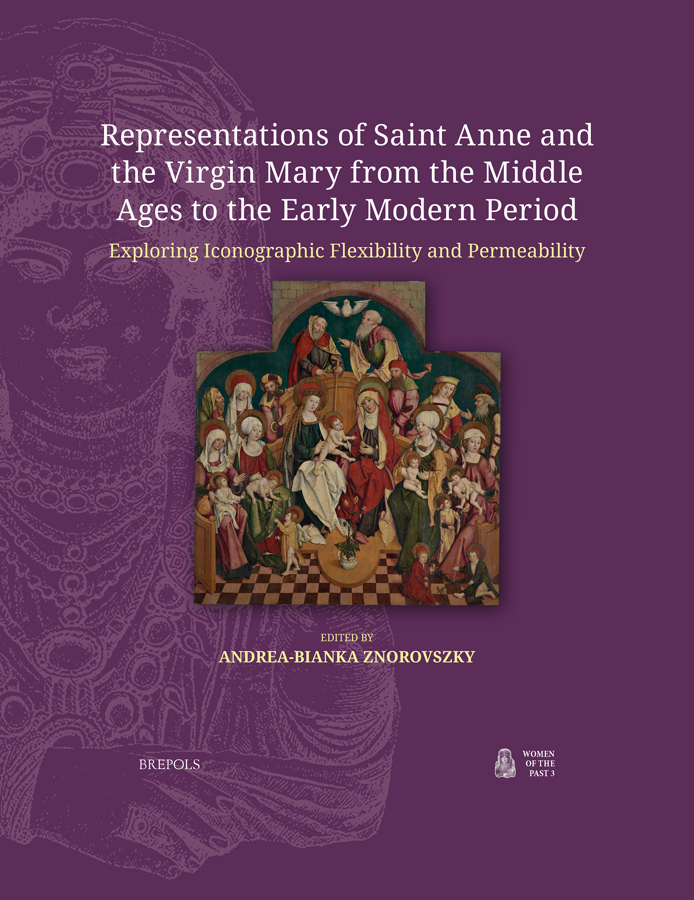
Between the thirteenth and the sixteenth centuries, the cult of the Virgin Mary underwent significant changes, a shift clearly revealed by an increase in artistic representations of Mary, as well as a flourishing devotional literature in her honour, written in both Latin and the vernacular. One aspect of this change was a broader attention to Mary’s genealogical line, and in particular to her relationship with St Anne. The result was not only a renewed focus on the vita Annae, but also a significant overlap in how these two women were represented, juxtaposed, and perceived.
This volume traces the often significant iconographic flexibility in terms of both how the Virgin Mary and Saint Anne were presented and perceived, and what can be termed a permeability between visual representations of the two saints. Focusing on the multiple readings, layers of meaning, and the visual interplay between the vita Mariae and the vita Annae, the chapters gathered here explore the overlap and influence between different iconographic motifs, and how these were used to advance political, religious, and social ideologies at the time of their creation, as well as exploring representations across a range of different media, from sculptures and frescoes to panel paintings, and manuscript illuminations.
Published with Brepols Publishers (https://www.brepols.net/products/IS-9782503608853-1).
Discover more from Medieval Art Research
Subscribe to get the latest posts sent to your email.
 Medieval Art Research