EAA Annual Meeting, Rome 2024, 28-31 August 2024
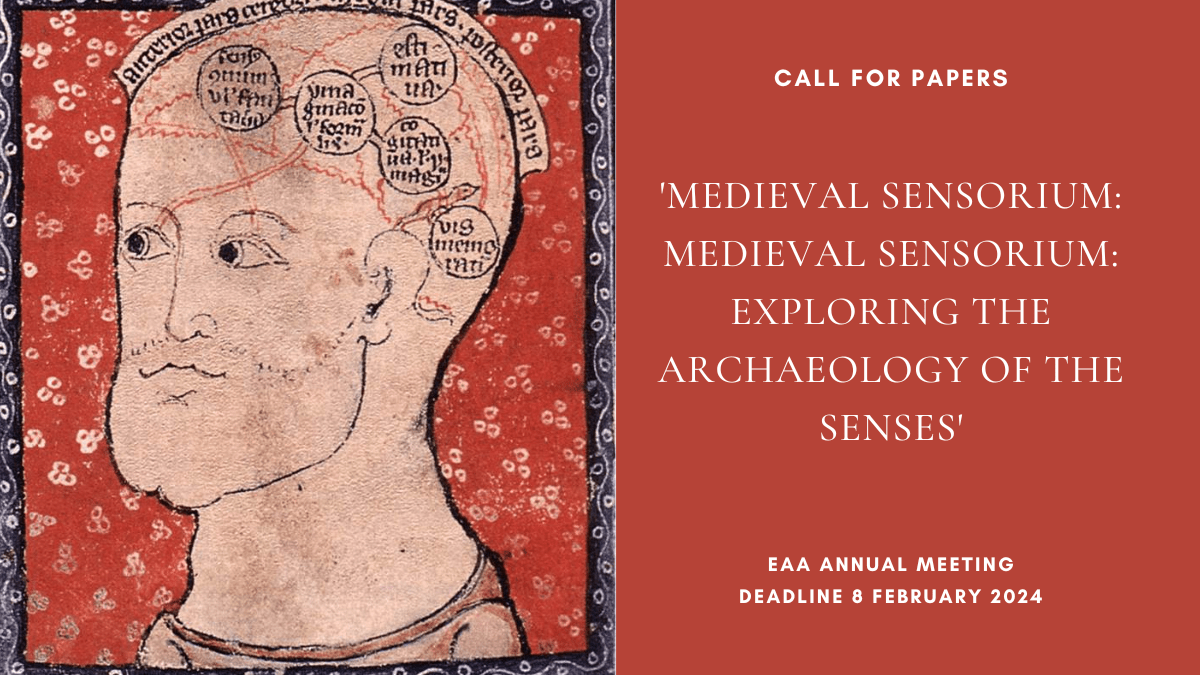
Session #542: ‘Medieval Sensorium: Medieval Sensorium: Exploring the Archaeology of the Senses’
In recent decades, the exploration of sensory experiences in the Middle Ages has attracted increasing attention across diverse scientific disciplines. This session is envisioned as a dynamic platform that fosters interdisciplinary dialogues, delving into the multifaceted sensory landscape of the medieval world. The central question addresses how medieval communities perceived, understood, and harnessed their sensory reality. Therefore, this session aims to uncover the intricate interplay of senses within their spatial contexts, the portrayal of sensory experiences in visual arts, and the sensory encounters that enriched the lives of rural and urban medieval communities. It sets out to discuss a wide spectrum of sensory encounters, encompassing both interior and exterior spaces, including those of sacred and secular significance. Particular interest is placed on the methodologies employed for researching the sensory experiences of the medieval world, as well as the presentation of research outcomes. Consequently, contributions that employ cutting-edge technologies to explore and map sensory experiences within historical contexts are warmly welcomed. Embracing an interdisciplinary approach, this session promises to illuminate and broaden our understanding of the medieval sensorium and the profound role that the senses played in shaping cultural practices and landscapes of the medieval world.
Abstracts up to 300 words are accepted until February 8th 2024. More information on applying can be found here.
Discover more from Medieval Art Research
Subscribe to get the latest posts sent to your email.

