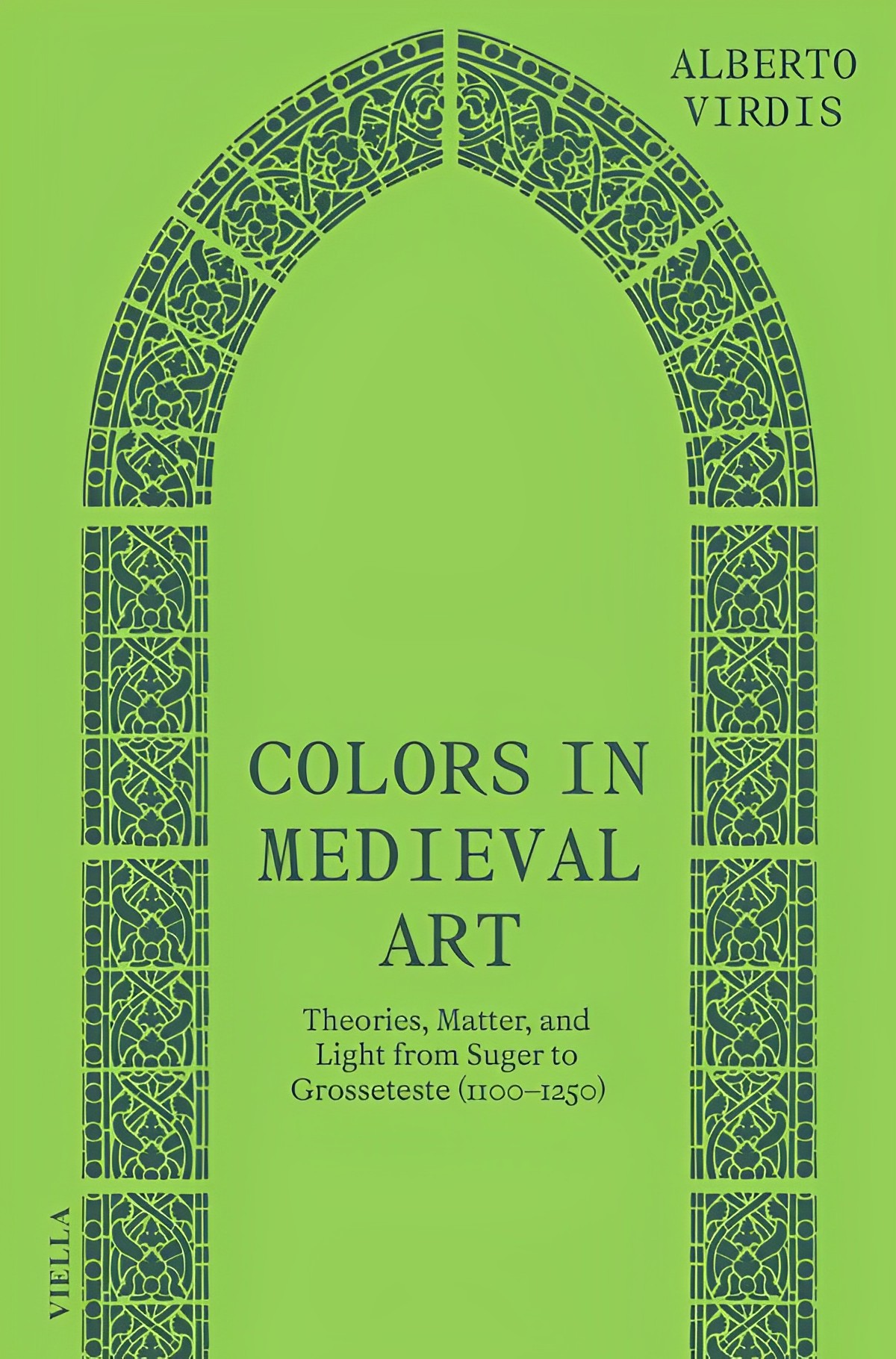
Projected color saturates our world of images and screens, leading to a dissociation of color from material realities through its cultural attachment to light and the efflorescence of optics. Under these conditions, it is difficult to imagine a past where color was an eminently material, cultural, and social object. This book argues that color is and was a central “cultural object” within art history, a fact first elucidated through an examination of the debates and difficulties of color in language, theology, science, and philosophy. Following this overview of medieval aesthetical debates, the author pursues two pivotal case studies which span the twelfth and thirteenth centuries: the Basilica of Saint-Denis and the Cathedral of Lincoln, respectively connected to the figures of the abbot Suger and the bishop Robert Grosseteste. Prominent thinkers and concepteurs of sacred spaces and images, they both confronted existing theories of color and optics, and the theology of Pseudo-Dionysius the Areopagite. The case studies both center the art of stained glass, a revolutionary medium that blurs the boundaries between color, materiality, and light. Emerging strongly throughout this beautifully illustrated volume are traces of a central Middle Ages in which color played a fundamental yet groundbreaking role at the crossroads of aesthetic, intellectual, and theological issues.
Find out more about this publication here.
Contents
- ACKNOWLEDGMENTS
- PREFACE by Herbert L. Kessler
- INTRODUCTION: THE ELUSIVENESS OF COLORS
- FROM MODERN TO MEDIEVAL COLOR: METHODOLOGICAL CAVEATS AND HISTORIOGRAPHICAL APPROACHES
- HISTORIOGRAPHICAL APPROACHES
- THE COLOR AND LANGUAGE CONUNDRUM
- A HISTORIOGRAPHICAL NOTE: KOLORITSGESCHICHTE VS. HISTORICAL APPROACH
- Michel Pastoureau: Colors at the Crossroads of History and Anthropology
- From Color to Experience and Abstraction
- 1. SCIENCE, THEOLOGY, AND AESTHETICS
- 1.1 COLOR AND THEORIES OF VISION
- Plato and Aristotle
- The Islamic World and the Spread of Aristotelian Knowledge
- From Al-Kindī to Averroes
- From the Early Medieval Three-Color System to Intermediate Colors: Medieval Encyclopedias and the Look on the Natural World
- 1.2. THEOLOGICAL DEBATE AND AESTHETIC FORMULATIONS ON LIGHT AND COLORS: AN INTERTWINING DIALOGUE
- Late Antiquity
- Pseudo-Dionysius’ Neoplatonism and its Long Legacy
- Matter or Light? Early Medieval Aesthetics and the Iconoclastic Controversy
- From Bernard of Clairvaux to Robert Grosseteste: Theology, Literature, and Science
- 1.3 TECHNICAL ART TREATISES OF THE EARLY MIDDLE AGES AND THE TWELFTH CENTURY
- Heraclius’ De coloribus et artibus Romanorum
- De coloribus et mixtionibus
- Theophilus’ Schedula diversarum artium
- 1.1 COLOR AND THEORIES OF VISION
- 2. A KIND OF BLUE: ABBOT SUGER AND THE MATERIA SAPHIRORUM
- 2.1. THE ABBEY OF SAINT-DENIS
- Historical Milestones
- The Enlargement of the Basilica at the Time of Suger (ca. 1135–1144)
- The French Revolution and the Nineteenth Century
- 2.2. COLOR, STAINED-GLASS WINDOWS, LITURGICAL FURNISHINGS, AND THE NEOPLATONIC METAPHYSICS OF LIGHT
- Light and Color in Suger’s Writings
- The Metaphysics of Light
- What is the Materia Saphirorum
- Saphirus as a Color Term
- Saphirus as a Precious Stone
- Saphirus as a Pigment
- Anagogical Colors: From Matter to Light
- 2.3. THE ICONOLOGY OF BLUE AT SAINT-DENIS
- The Rise of Blue
- A Supernatural Color?
- 2.1. THE ABBEY OF SAINT-DENIS
- 3. ROBERT GROSSETESTE’S DE COLORE AND THE CATHEDRAL OF LINCOLN
- 3.1. ROBERT GROSSETESTE: A BIOGRAPHICAL PROFILE
- Grosseteste’s Works
- 3.2. LIGHT AND COLOR
- De Luce, De Colore, De Iride, and Le Chasteu d’amur
- 3.3. THE CATHEDRAL OF LINCOLN AND ITS STAINED-GLASS WINDOWS
- Architecture
- The Thirteenth-Century Stained-Glass Windows
- The Vitae of St. Hugh of Lincoln
- 3.4. GROSSETESTE’S TRANSLATION OF PSEUDO-DIONYSIUS
- The Mystical Theology, Color Metaphors, and Stained-Glass Windows
- 3.1. ROBERT GROSSETESTE: A BIOGRAPHICAL PROFILE
- 4. MYSTICAL COLORS: ANAGOGICAL WINDOWS IN LINCOLN AND SAINT-DENIS
- CONCLUSIONS
Biography of author
Alberto Virdis
Alberto Virdis is a researcher in Medieval Art at the Masaryk University, Centre for Early Medieval Studies, Brno. He is currently leading a project funded by the Czech Science Foundation on the origins of stained glass art in the Early Middle Ages. His main research interests span from the history of colours in medieval art and their relation with the art of stained glass, to artistic and cultural interactions in the Mediterranean space in the High Middle Ages, with a special focus on mural paintings and studies on Medieval landscape.
Discover more from Medieval Art Research
Subscribe to get the latest posts sent to your email.
 Medieval Art Research