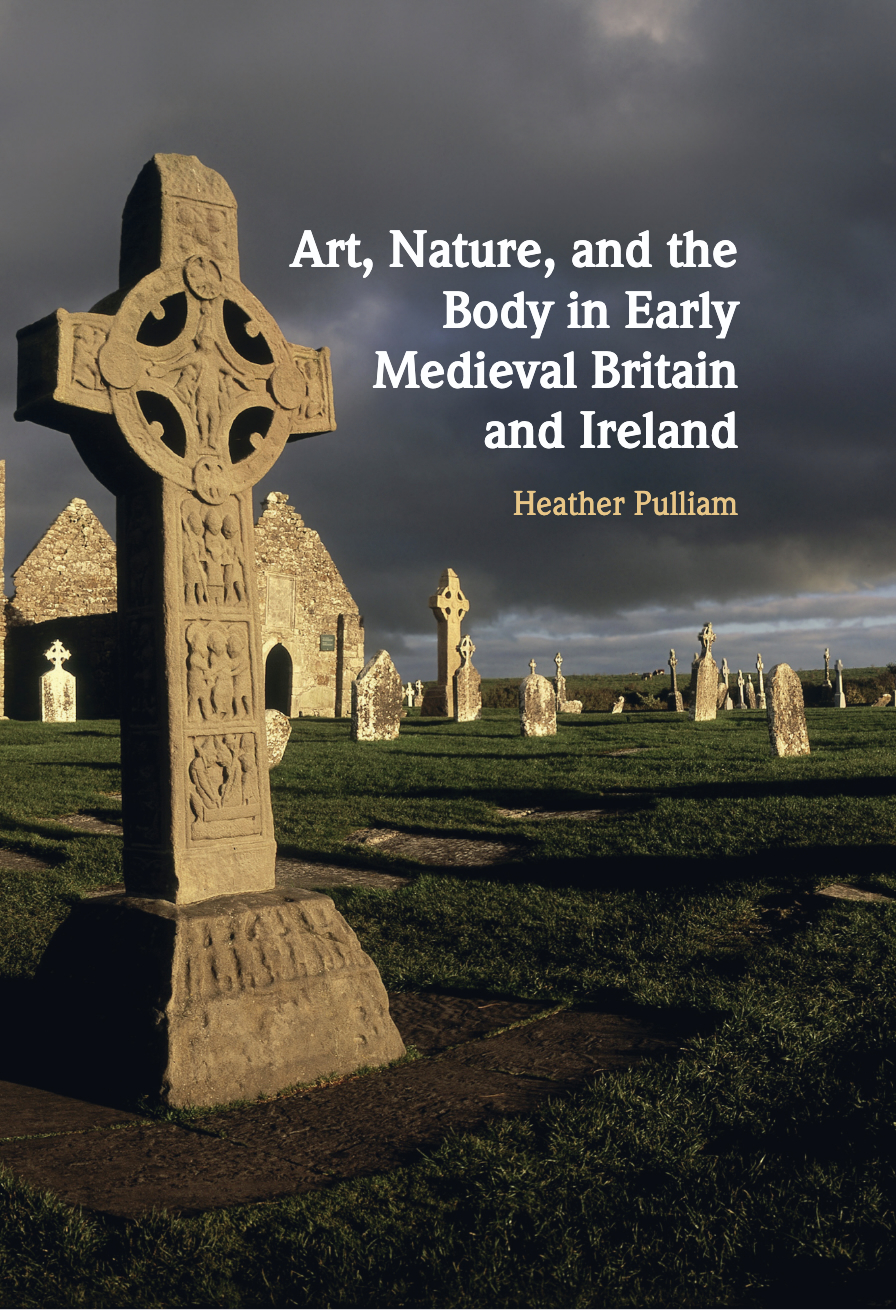
New Publication: ‘Art, Nature and the Body in Early Medieval Britain and Ireland’, by Heather Pulliam
How did the living world – bodies, time, motion, and natural environment – frame the art of early medieval Britain and Ireland? This study investigates how the early medieval objects and monuments produced in Britain and Ireland enabled Christian audiences to unite with and be ‘dissolved’ in an intangible divinity. Using phenomenological and eco-critical methodologies, she probes intersections between art objects, the living world, and the embodied eye.
Pulliam analyses a range of objects that vary in scale, form, and function, including book shrines, brooches worn on the body, and reliquaries suspended in satchels. Today, such objects are discussed, displayed, and illustrated as static rather than mobile objects that human bodies wore and that accompanied them as they travelled through landscapes animated by changing weather, seasons, and time. Using the frame as a heuristic device, she questions how art historical studies approach medieval art and offers a new paradigm for understanding the role of sacred objects in popular devotion.
Find out more about the book on the Cambridge University Press website.
About the Author
Heather Pulliam is Professor of Art History at the University of Edinburgh. She has published in The Art Bulletin, Gesta, and Studies in Iconography and is author of Word and Image in the Book of Kells (2005). Co-Editor of Irish and Scottish Art, c. 900–1900: Survivals and Revivals (2024), she served on the curatorial team of Celts: Art and Identity, an exhibition held at the British Museum.
Discover more from Medieval Art Research
Subscribe to get the latest posts sent to your email.

