
Under the reign of Charles VII, art experienced an extraordinary rebirth. The exhibition “Arts in France during the time of Charles VII (1422-1461) ”, presented at the Musée de Cluny – Musée National du Moyen Âge from 12 March to 16 June 2024, highlights this pivotal moment in the history of art.
From the 1420s, during the Hundred Years’ War, the Kingdom of France underwent profound political and artistic changes. In the north of the kingdom, occupied by the English and the Burgundians, multiple artistic centres emerged. When the dauphin Charles managed to win back his throne, thanks in particular to Joan of Arc, followed by his kingdom, all the conditions for a revival were met. Key patrons, such as Jacques Cœur, called on a new generation of artists, who converted to Flemish realism – known as ars nova – which was on the rise with Jan van Eyck in particular, while through the Italian influence, they drew on the classical heritage developed by artists such as Filippo Brunelleschi, Donatello and Giovanni Bellini. Artistic creation gradually broke away from international Gothic and shifted to a new vision of reality, foreshadowing the Renaissance.
After an initial section for historical contextualisation, the exhibition demonstrates the diversity of the arts in the key geographical centres, often associated with major patrons. In the third and final section, the route provides an analysis of the specificities of this art in France, between Burgundian and Flemish ars nova and Italian innovations. A key chapter is devoted to Provence and the role of René d’Anjou, patron and one of the early champions of northern art, exploring the figure of the artist Barthélemy d’Eyck among others.
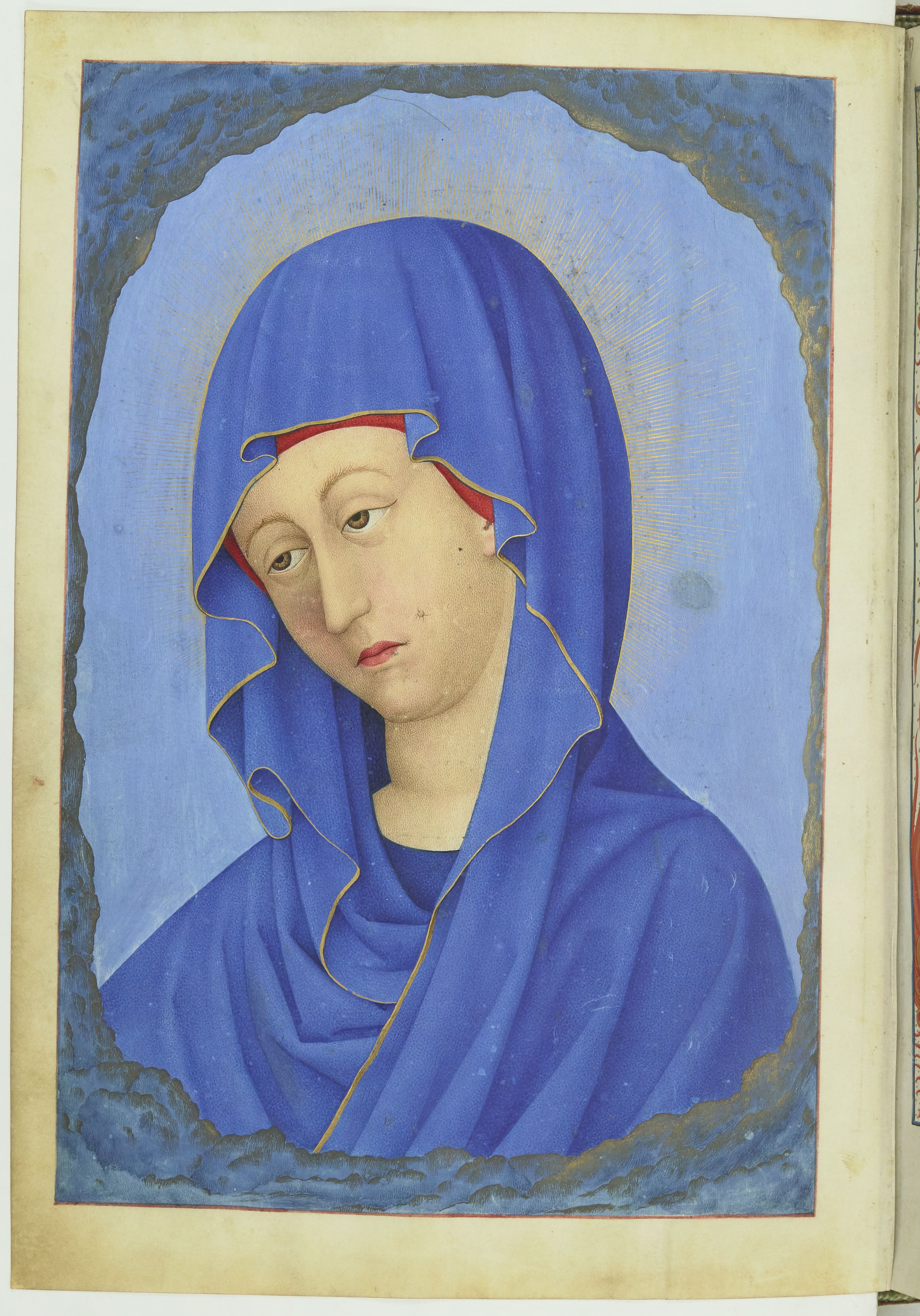
Throughout the visit, the exhibition explores the diversity of artistic production during the reign of Charles VII. It brings together prestigious illuminated manuscripts, paintings, sculptures, gold and silversmithery, stained glass and tapestries. It includes exceptional works, such as the canopy of Charles VII (Musée du Louvre), the manuscript of the Rohan Hours (Bibliothèque nationale de France) or the Aix Annunciation (Aix-en-Provence) by Barthélemy d’Eyck, a painter for Duke René of Anjou who illuminated his Tournament Book (Bibliothèque nationale de France). For the first time, the Parisian triptych of the Passion and Resurrection of Christ by André d’Ypres will be fully reconstructed (Musée du Louvre, Getty Museum, Musée Fabre). Finally, an entire section will be dedicated to Jean Fouquet, one of the greatest French painters of the 15th century. A genius of illumination, he produced the famous portrait painted on wood of Charles VII (Musée du Louvre), presented in its rightful place in the exhibition.
The exhibition “Arts in France during the time of Charles VII (1422-1461)” is organised by the Musée de Cluny – Musée National du Moyen Âge and the GrandPalaisRmn. Several curators from major national institutions have been brought together for the exhibition, including Mathieu Deldicque, Chief Heritage Curator, Director of the Musée Condé in Chantilly,
Find out more about the exhibition on the Musée de Cluny website.
Discover more from Medieval Art Research
Subscribe to get the latest posts sent to your email.
 Medieval Art Research