The In via Dante Network at the University of Leeds are hosting three colloquia aimed at creating a platform for doctoral and early career researchers working on Dante across different institutions to come together to discuss their work. Our 2021 colloquia will focus on Dante’s relationship to three areas of enquiry: Latin literature (and its medieval reception); medieval religious culture; and medieval conceptions of space and architecture.
The format for each colloquium will be as follows: three PGRS or early-career researchers will present their work to a panel of three established scholars from a range of disciplines who will act as respondents and guide subsequent discussions (20 mins/paper followed by 20 mins of discussion of each paper).
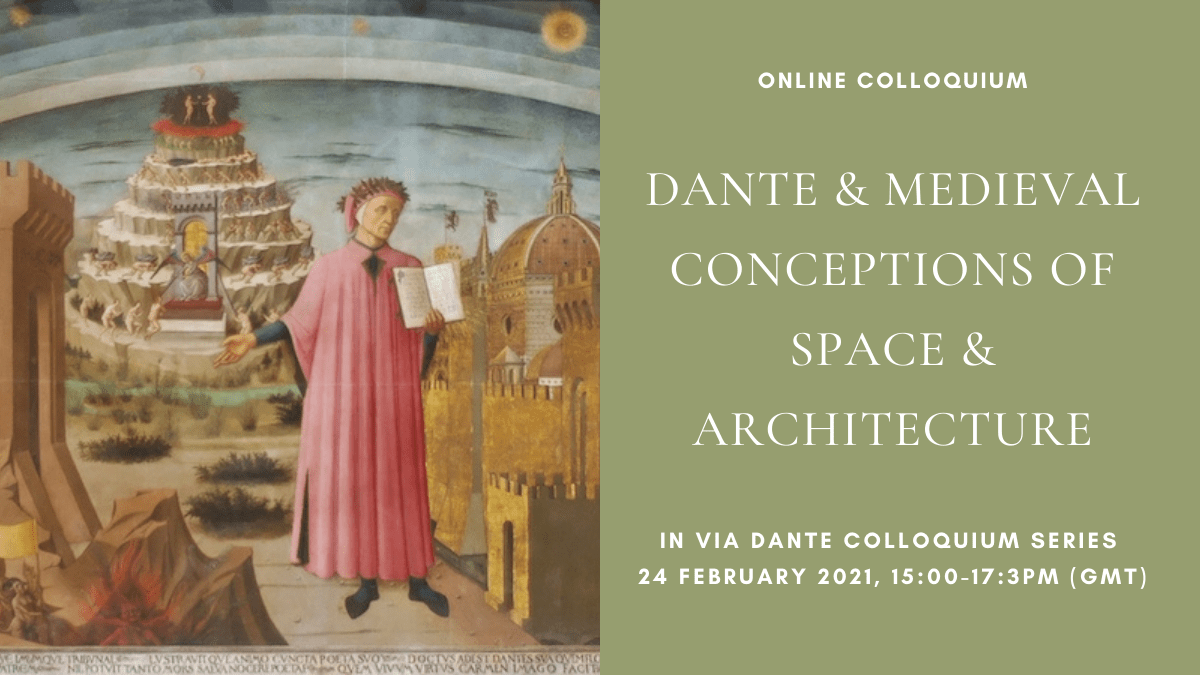
The first colloquium will focus on ‘Dante & Medieval Conceptions of Space and Architecture’ and will be held online on 24 February from 3:00-5:30 GMT.
In all three realms of the afterlife, Dante describes the architecture and spaces he encounters as meaningful. These representations provide clues to how one moves through and experiences space as an individual and/or community in activities like prayer, processions, meditation, and other religious practices. This colloquium seeks to explore how Dante’s Commedia is shaped and informed by medieval conceptions of space and architecture.
Presenters: Caroline Domor (Oxford), Emma Wall (Durham), and Elisabeth Trischler (Leeds) will each present a 20 minute paper.
Respondents: Christopher Kleinhenz (Wisconsin-Madison) and Theodore J. Cachey Jr. (Notre Dame)
Click here to register.
Discover more from Medieval Art Research
Subscribe to get the latest posts sent to your email.
 Medieval Art Research