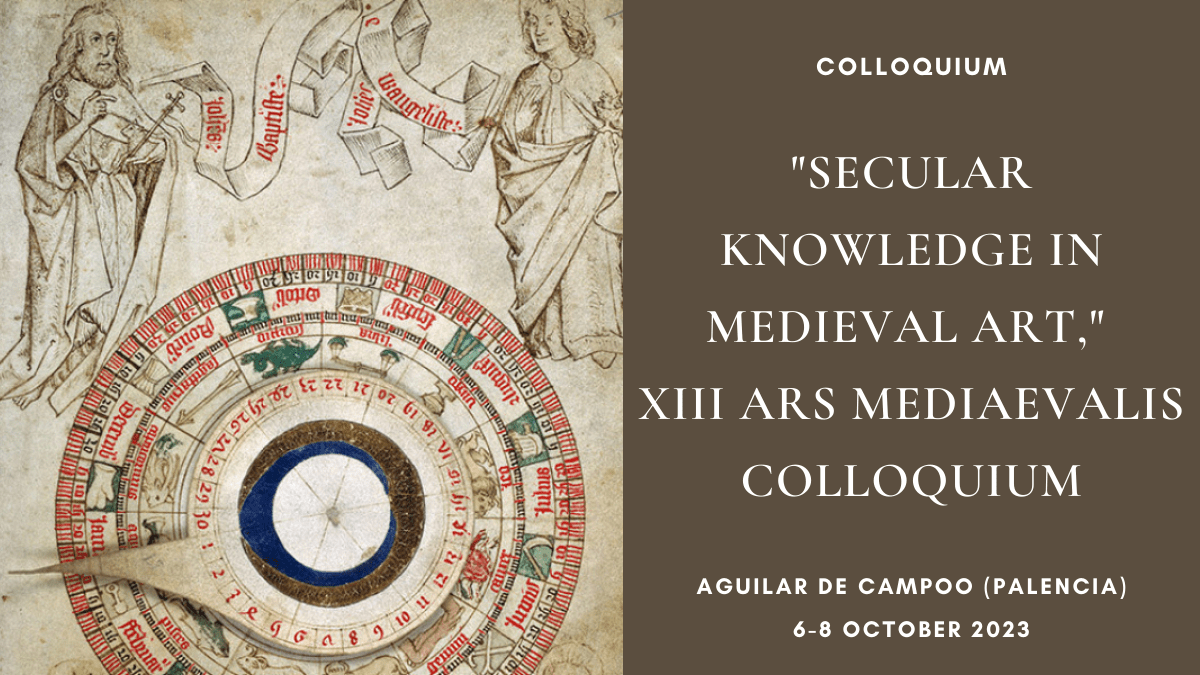
A substantial part of the scientific knowledge developed in the Middle Ages was inherited from Roman (in Western Europe) and Greek (in the Byzantine and Islamic domains) culture. However, new cognitive procedures were also developed in medieval societies, among them some related to vision, astronomy or zoology. Knowledge of the secular world was translated and codified in the three domains of the Middle Ages (Latin, Greek and Arabic) through complex and varied visual devices. These ingenious images allow us to understand how the procedures of thought and memory were established. With these iconic creations, the most dynamic cultural centres sought to provide themselves with didactic and mnemonic tools to say, think or remember the universe, earthly creatures or celestial realities more efficiently. Both the European continent and the Mediterranean shores witnessed the fluid communication between different domains in order to advance in the knowledge of the created and populated space, translating, codifying or reinterpreting what others had proposed before, or else enlightening new formulas and channels to solve the questions of people who intensified their self-awareness.
PROGRAM
6 de octubre (Aguilar de Campoo: Sede Fundación Sta. Mª la Real)
Presidencia de sesión: Alejandro García Avilés (Universidad de Murcia)
08.45 h.: Recepción de asistentes
09.15 h.: Presentación e inauguración del Coloquio
09.45 h.: Kathrin Müller (Humboldt-Universität, Berlin): Fundamental Knowledge. Personifications of the artes liberales on High Medieval Liturgical Objects
10.30 h.: Debate
10.45 h.: Pausa-café
11.15 h.: Anna Caiozzo (Université d’Orleans): Entre images scientifiques, merveilles (terrestres) de la Création et imaginaires religieux
12.00 h.: Martin Schwarz (Universität Basel): The Crucifixion Eclipse and the Illumination of Philosophy in the Vie de Saint Denis (BnF, fr. 2090)
12.45 h: Debate
Sesión de tarde (Aguilar de Campoo: Sede Fundación Sta. Mª la Real)
Presidencia de sesión: Mª Teresa López de Guereño (Universidad Autónoma de Madrid)
16.00 h.: Laura Fernández Fernández (Universidad Complutense de Madrid): Entre fábulas y estrellas errantes. La luna en el imaginario alfonsí
16.45 h.: Debate
17.30 h.: Visita al monasterio de Santa María la Real
7 de octubre (Saldaña. Villa romana La Olmeda)
Presidencia de sesión: Susana Clavo Capilla (Universidad Complutense de Madrid)
09.15 h: Desplazamiento en autobús a la villa romana La Olmeda
10.30 h.: Licia Buttà (Universitat Rovira i Virgili): La danza en los tratados morales y de cortesía y su visualización en el relato poético narrativo en la Edad Media
11.15 h.: Begoña Cayuela (Universitat de Barcelona): Del stemma al grafo y viceversa. Los diagramas de las llamadas Tablas genealógicas en la miniatura hispana medieval: origen y pervivencias.
11.35 h.: Nerea Maestu Fonseca (Universidad Complutense de Madrid): Vislumbres de cometas entre rayos y truenos: astrometeorología y teoría cometaria en la Edad Media.
11.55 h.: Debate
12.30 h.: Visita a la villa romana de La Olmeda
14.00 h.: Comida (a cargo de la organización)
16.00 h.: Visita al arte medieval de Cisneros
8 de octubre (Aguilar de Campoo: Monasterio Sta. Mª la Real)
Presidencia de Sesión: Fernando Gutiérrez Baños (Universidad de Valladolid)
09.30 h.: Marius Hauknes (University of Notre Dame): Representing the Origins of Human Knowledge
10.15 h.: Hanna Wimmer (Universität Hamburg): Visualising Logic in the Middle Ages
11.00 h.: Debate
11.30 h.: Descanso
12.00 h.: Rosa Rodríguez Porto (Universidad de Santiago de Compostela): Incidentiae: Tiempo, espacio y sincronía en la historiografía medieval
12.45 h.: Debate
13.00 h: Conclusiones y perspectivas
13.15 h.: Clausura y entrega de certificados a los asistentes
Register here: https://tienda.santamarialareal.org/es/productos/detalles/xiii-coloquio-ars-mediaevalis-saberes-seculares-en-el-arte-medieval/761
Discover more from Medieval Art Research
Subscribe to get the latest posts sent to your email.
 Medieval Art Research