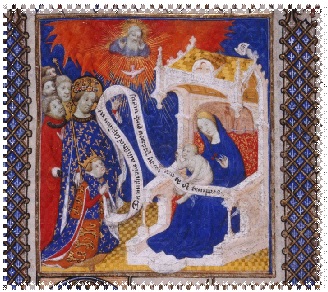
© The British Library Board (Cotton MS Domitian A. XVII f.50r)
The Plantagenet Empire, 1259-1453
Tuesday 15th – Friday 18th July 2014
Harlaxton Manor, Harlaxton, Lincs
Provisional Programme
Tuesday, 15th July
2:00 Welcome by Christian Steer (Symposium Secretary)
2:15–3:30 Session 1: Introductions: Themes and Approaches
Mark Ormrod, David Green, Peter Crooks
This session will offer some introductory thoughts on approaches to the subject of the Plantagenet Empire, with considerations of methodology, historiography, terminology, and the ‘imperial model’.
3:30 -4:15: Tea
4:15–5:30 Session 2: Ideology and Perceptions of Empire
Jean-Philippe Genet, „Empire and the English identity: reflections on the king of England‟s dominium‟
Len Scales, „The Empire in translation: English perspectives on imperium and emperors, 1220-1420‟
6:00–7:00: Dinner
7:15 Informal visit to Harlaxton church
Wednesday, 16th July
7:00-8.30: Breakfast
9:00–10:15 Session 3: Domination and Conquest
Brendan Smith, „Status and Power in the Plantagenet Empire‟
Craig Taylor, „Imagining the Lancastrian Empire in France‟
10:15-11:00: Coffee
11:00–12:45 Session 4: Resistance and Collaboration
Seán Duffy, „Irish and Welsh responses to empire, 1258-1327‟
Francoise Lainé, „Uncommon seneschals in Aquitaine: three Gascon commoners in Edward II‟s time‟
Rachel Moss, „Substantiating Sovereignty: Regal Imagery in Plantagenet Ireland‟
1:00: Lunch
2:00–3:45 Session 5: Peripheral Perspectives
Jackson Armstrong, „Peripheries, Provinces and the Plantagenet North‟
Peter Fleming, „Bristol and the end of Empire: the consequences of the fall of Gascony‟
Helen Fulton, „Cultural interactions between Wales and Ireland, c. 1300‟
3:45–4:15: Tea
4:15–6:00 Session 6: Imperial Networks 1
Anne Curry, „The baillis of Lancastrian Normandy: English men wearing French hats?‟
Andrea Ruddick, „Clerical careers and networks in the Plantagenet world‟ Joel Rosenthal, „Have Mitre, will travel: Edward III‟s bishops as diplomats‟ 6:00–7:00: Dinner
Thursday, 18th July
7:00-8:30 Breakfast
9:00–10:45 Session 7: Race and Identity
Julian Luxford, „Specimens of race: their representation in Plantagenet documents‟
Godfried Croenen, „Regional identities in France: Froissart and other chroniclers‟
Kim Woods, „Plantagenets in Alabaster‟
10:45-11:15: Coffee
11:15–1:00 Session 8: Imperial Networks 2
Michael Bennett, „The Plantagenet empire as „enterprise zone‟: war and business networks, c. 1415-1450‟
Jessica Lutkin, „Patterns of purchase – the networks of English goldsmiths, alien merchants and Plantagenet patrons‟
Gwilym Dodd, „Minor Diplomatic Incidents: the English Crown and Foreign Litigants‟
1:00: Lunch
2:00: Excursion to Tattershall Castle and Church
7:00: Reception
7:30: Symposium Dinner in the Great Hall
Friday, 18th July
7:00-8:30: Breakfast
9:30–10:45 Session 9: Language and Communication
Serge Lusignan, „Communication in the Later Plantagenet Empire: the Use of Anglo-French in England and in continental domains‟
Steve Boardman, „ “Our mother tongue”: language and the “end of empire” in fourteenth-century Scotland‟
10:45–11:15: Coffee
11:15–12:30 Session 10: Responses: The Empire in Retrospect and Prospect
Michael Brown, „The Plantagenet Empire and the Insular World‟
John Watts, „The Plantagenet Empire and the Continent‟
12:45: Lunch and departure
TO BOOK, VISIT
http://harlaxton.org.uk/
Discover more from Medieval Art Research
Subscribe to get the latest posts sent to your email.
 Medieval Art Research